
Why Do Cats Move Their Tails: Unraveling Feline Mysteries
Cats are fascinating creatures. One of their most interesting features is their tail. Have you ever wondered why cats move their tails? Let's dive into the world of cat tails and discover the reasons behind their movements.
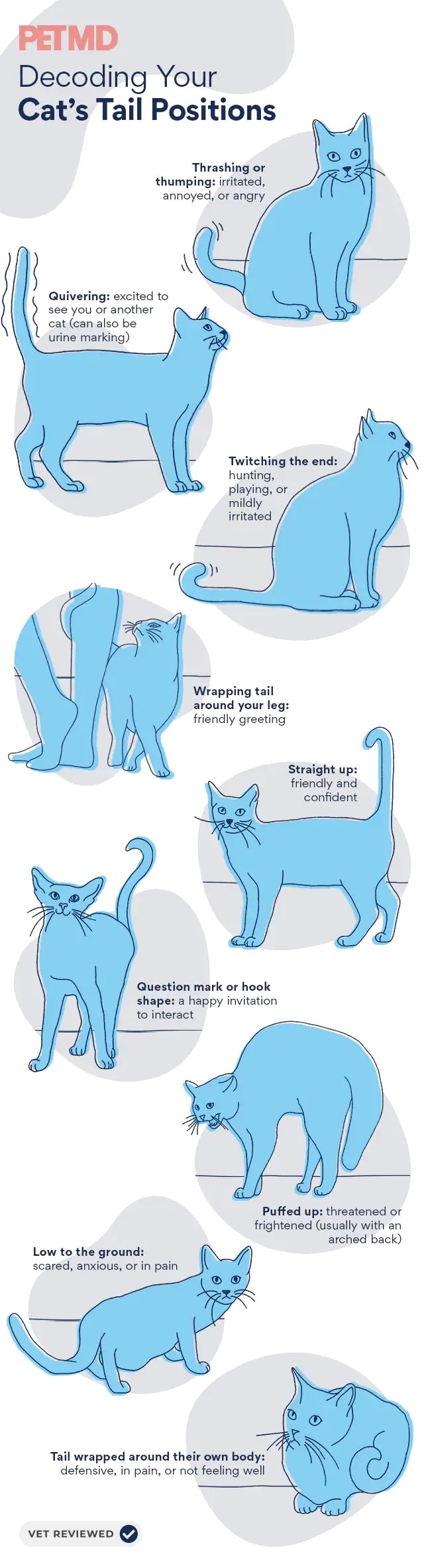
Credit: www.petmd.com
The Basics of Cat Tail Movements
Cat tails are very expressive. They communicate many things through their tail movements. Here are some basic reasons why cats move their tails:
- Expressing emotions
- Maintaining balance
- Communicating with other animals
- Responding to their environment
Expressing Emotions
Cats have feelings just like us. They use their tails to show how they feel. Here are some common tail movements and what they mean:
| Tail Movement | Meaning |
|---|---|
| High and straight | Happy and confident |
| Low and tucked | Scared or anxious |
| Puffed up | Frightened or angry |
| Slowly swaying | Curious or focused |
| Quickly twitching | Excited or irritated |
Maintaining Balance
Cats are very agile. They use their tails to help them balance. When they jump or climb, their tails help them stay steady. This is very important for cats, especially when they are hunting or playing.
Communicating with Other Animals
Cats also use their tails to talk to other animals. They send signals with their tail movements. This helps them communicate with other cats, dogs, and even humans. For example, a cat may flick its tail to show it is annoyed. This is a warning to other animals to stay away.
Responding to Their Environment
Cats are very aware of their surroundings. They often move their tails in response to what is happening around them. If they hear a noise or see something interesting, their tails might twitch or swish. This shows that they are alert and paying attention.
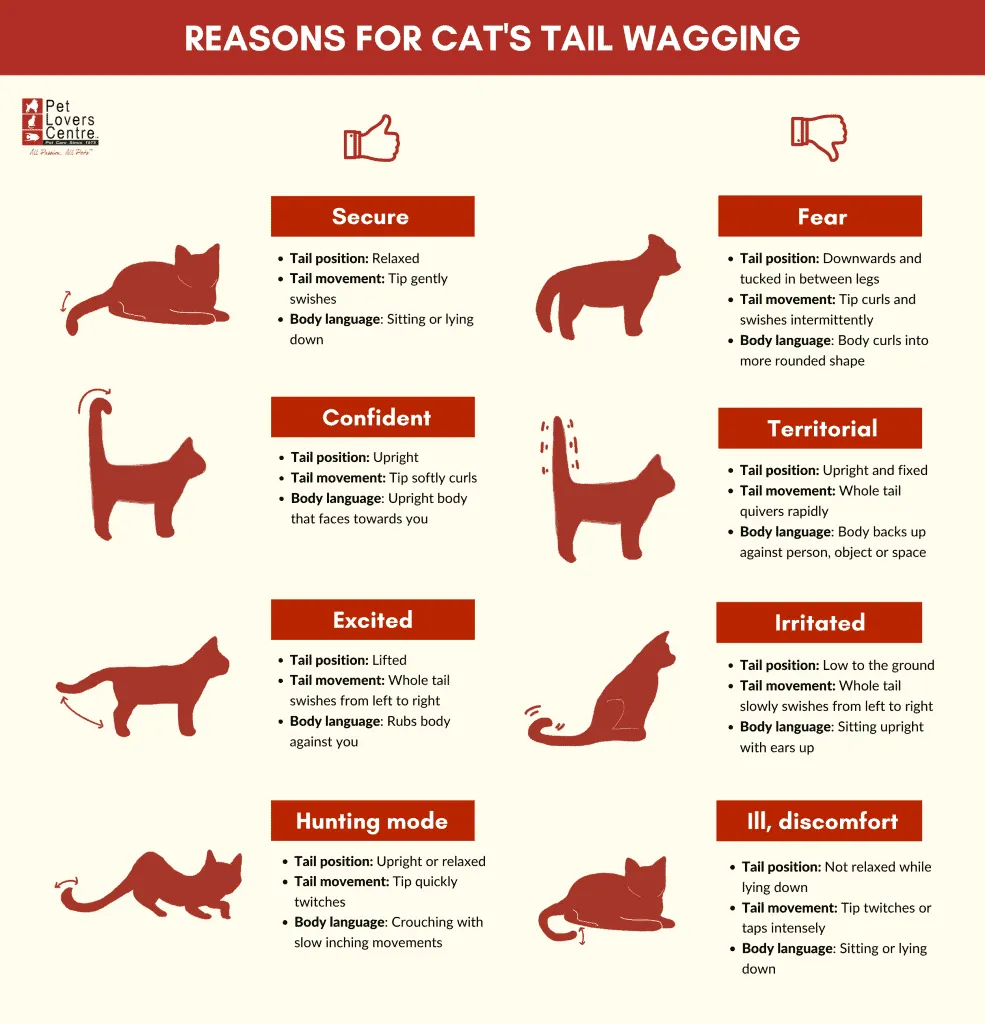
Credit: blog.petloverscentre.com
Understanding Cat Tail Movements
It is important to understand what your cat's tail movements mean. This can help you know how they are feeling. Here are some tips to help you understand your cat's tail movements better:
- Watch your cat's tail closely
- Pay attention to other body language signs
- Notice how your cat reacts to different situations
- Learn about common tail movements and their meanings
Frequently Asked Questions
Why Do Cats Flick Their Tails?
Cats flick their tails to express irritation or excitement.
What Does A Cat's Tail Movement Mean?
A cat's tail movement indicates its mood and feelings.
Why Do Cats Wag Their Tails While Resting?
Cats wag their tails while resting to show contentment or alertness.
Do Cats Wag Their Tails Like Dogs?
Cats wag their tails differently than dogs; it often means irritation or curiosity.
Conclusion
Cats move their tails for many reasons. They use their tails to express emotions, maintain balance, communicate with other animals, and respond to their environment. By understanding these tail movements, you can better understand your feline friend. So next time you see your cat's tail moving, you will know what it means!
FAQs
1. Why Do Cats Flick Their Tails When Lying Down?
Cats flick their tails when lying down to show they are relaxed but alert. They might be paying attention to something around them.
2. What Does It Mean When A Cat's Tail Is Puffed Up?
A puffed-up tail means the cat is scared or angry. It tries to make itself look bigger to scare off threats.
3. Can A Cat's Tail Movement Show It Is Happy?
Yes, a cat's tail can show happiness. A high and straight tail often means the cat is happy and confident.
4. Do All Cats Use Their Tails The Same Way?
Most cats use their tails in similar ways, but each cat is unique. Some cats might have their own special tail movements.
5. Can Tail Movements Help Cats Hunt?
Yes, tail movements can help cats hunt. They use their tails to balance while stalking or pouncing on prey.

Viola R. Daigle
I'm Viola R. Daigle, a dedicated Internet Marketer. I work with WarriorPlus as a Vendor and Affiliate, and I’m also an Affiliate on JVZoo and Legendary Marketer. My passion is to provide honest and detailed reviews of Internet Marketing (IM) products and software. I love helping people choose the right tools and strategies to grow their online business with confidence.
